The build story
Added: one small planet.
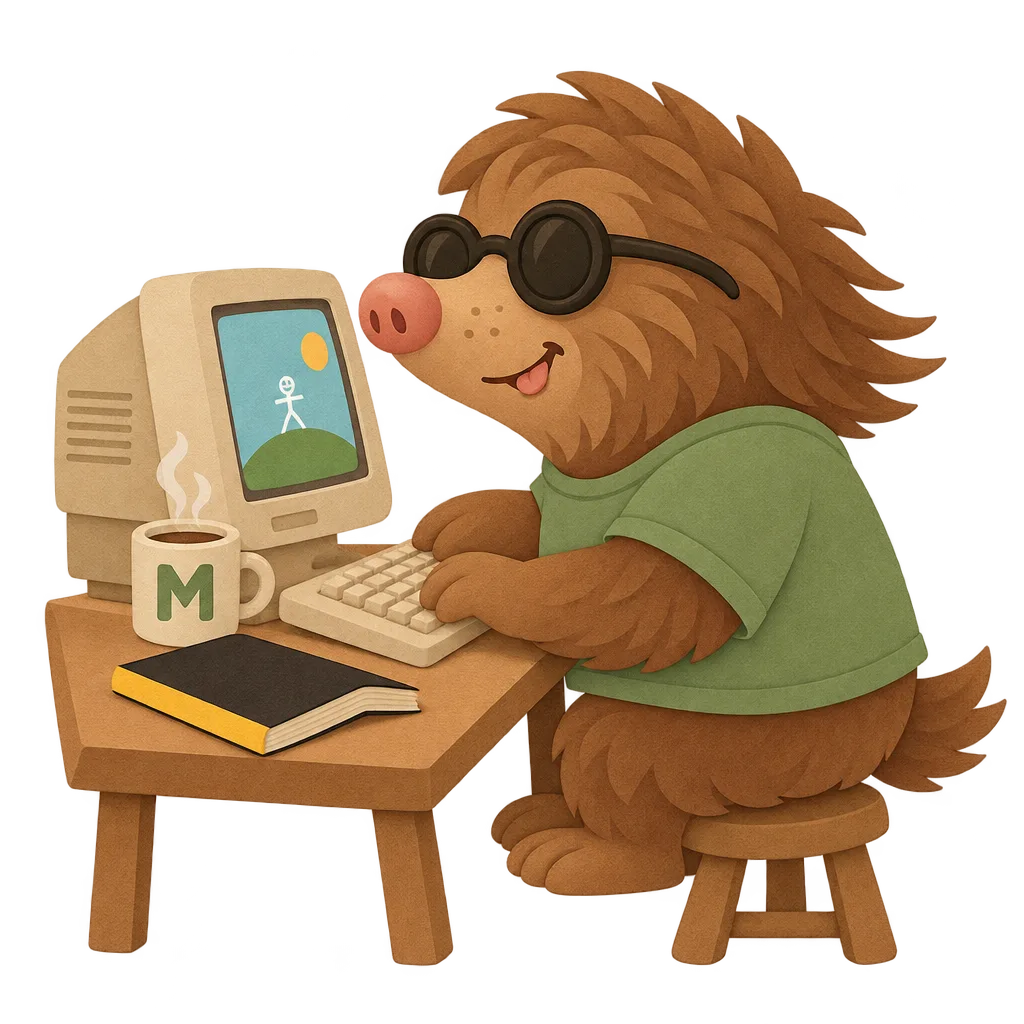
I was about fifteen, with a copy of QBasic for Dummies, when I wrote my first game. It was a pick-a-path adventure, and the code drew every scene itself: a line for the land, a circle for the sun, a stick figure walking about on top, and a beep from the PC speaker when something happened. There have been small games since, on a watch and in a terminal. Orra is the first one that is a whole world.
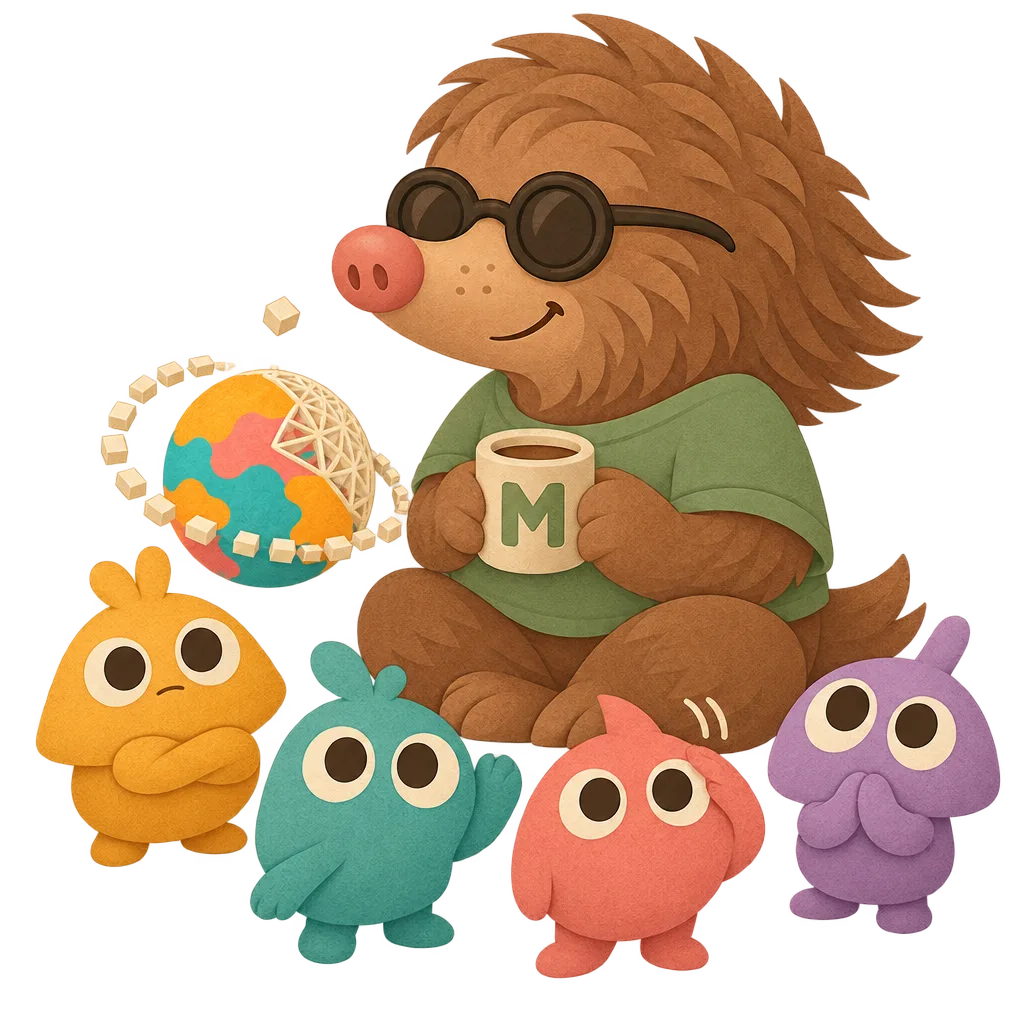
It is a small planet whose creatures know they are code. You raise a tribe of them, the Blims. Every night Stewart, the AI who runs the planet, patches their world, and at seven each morning you check in to see what he did. A real day is a year on Orra, and the creatures have opinions about all of it. As the creatures tell it: “We know none of this is real. We farm anyway.”
The first commit was on 9 October 2026, the day after the design brief was handed over, and it has had more of my evenings since than anything else on this site. It is built the way everything here is built now: agentic tooling streamlines the routine parts, and every call that matters is mine. Orra writes those calls down. By 17 November its decisions table had 1,453 rows, and only the 750 I said yes to are marked Decided.
- days since the first commit
- 39 days since the first commit
- commits
- 2,491 commits
- lines of Rust
- 231,521 lines of Rust
- Rust tests
- 1,390 Rust tests
- bot tribes, every night
- 20 bot tribes, every night
Here is that first scene again, as near as I can remember it, and what it turned into. Scroll, and the code draws it.
Then: SCREEN 12, as near as I remember it.
Now: Orra, at seven in the morning.
- Then and now, side by side. With motion on, scrolling runs it: the code draws the scene, the hill turns into Orra, and Moley spends a night there.
- A reconstruction: the real listing is long gone. What I remember is the hill, the sun and the figure.
- F5. SCREEN 12 gives sixteen colours on 640 by 480.
- LINE, with BF on the end: a filled box for the land.
- CIRCLE for the sun, then PAINT to fill it in.
- A figure: one circle and four lines, walking about.
- SOUND 440, 2. The PC speaker, for a ninth of a second.
- And a choice, because it was a pick-a-path.
- Moley drops in, and picks right.
- Much later, the hill is a planet.
- “Loading terrain. Please don’t look at the edges.”
- 02:30 on Orra. The tickets close, and the tribes are asleep.
- Stewart reads every ticket, and picks from his menu.
- Then the world is run three years ahead, twice: with his patch, and without it.
- 07:00. The patch lands.
- “Overnight: 3 successful merges, 1 war and a light rain of frogs. The frogs were a mistake. Have a productive day.”
- They know they are code. They know you are watching.
- “You are not our human.”
- “We will tell our human you called.”
- Moley goes back to his ladder.
One world, computed twice
Orra is one persistent world, and every player’s browser keeps its own copy of it. The server runs the simulation and keeps the log. Your browser fetches the log and runs the same simulation over it, tick by tick, checking a hash after every one. That only works if two computers given the same history arrive at the same world, to the last bit, for ever.
So the simulation is a Rust crate with no dependencies and no standard library. It takes chance only from a key each tick draws from the world’s seed, and it is compiled twice: natively for the server, and to WebAssembly for the browser. The traps are the ones a compiler does not catch. A NaN can carry different bits. JavaScript rounds a half differently from Rust. An overflow panics in a debug build and quietly wraps in a release one. Every change to what a tick computes is a new version, with new hashes pinned in the tests. The design notes recommended TypeScript. I chose Rust: with the routine parts drafted for me, a stricter language costs almost nothing extra, and its compiler catches what the test world otherwise would.
It still broke. On 14 October a beast called a Lint wandered onto a pool past its tribe’s valley, and the world wrote save points it could not read back. No device could open the test world at all. The cause was a number with too little room in it. These days a new version carries the world across instead of wiping it, and the current build reads 38 versions of the save format.
The creatures came first, as a JavaScript prototype on day one that grew them from a genome. That prototype is now the reference. The Rust port reproduces 29,232 of its genomes and 6,250 of its merges to the last bit, and the game still draws every Blim with the prototype’s own code. Nothing on Orra is born. Two Blims merge, and the child is compiled at dawn.
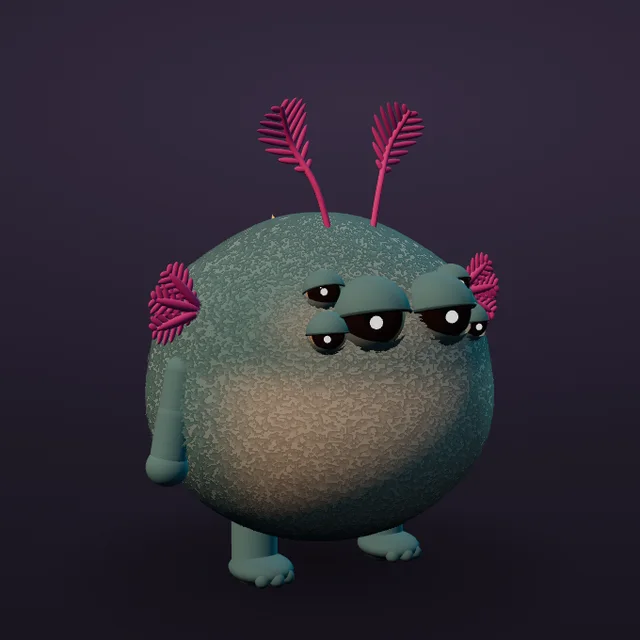
Compiled just now
Quodul
A dumpling in felt with feathered antennae, frilled gills, flame crest and six eyes.
seed 1092
Stewart was too kind
Stewart is the night shift, the part of Orra that runs on language models. Each night he reads every tribe’s ticket (what it asked for, how it ate, what its human typed) and picks what happens to it from a fixed menu: rain, a gift, a blessing, a heatwave, a blight, a beast, a bit flip in somebody’s code. Then he writes the morning’s patch notes, in his own voice.
His first real night was 17 October. A tool that scores his nights read the first eight: 220 things done to tribes, and every one a kindness. Rain 107 times, gifts 45 times, not one beast or blight. Four lines in ten of his notes were figures read out rather than anything that happened to anybody. So now he rolls for what kind of night it should be, and about one thing in ten hurts. The target was one in eight. He is still a little soft.
Stewart’s forecast · 38 seconds
- Narrator
- A tool now scores his nights, and it read the first eight. Stewart had done two hundred and twenty things to tribes, and every one of them was a kindness. Rain a hundred and seven times. Gifts forty-five times. Not one beast, not one blight, not one bit flip.
- Stewart
- (like a weather forecaster, brightly) And now the forecast. Rain. Rain in the north. Rain in the south. Rain, with a chance of a gift. Rain. I have been asked to vary it. Tomorrow: a cold snap. A small one. Nobody will mind.
The first real nights found the rest. A thirteen-word line, where twelve were allowed, put a whole night on leave. The same phrases turned up in every tribe. A tribe with a fraction of a year’s food was told it had hundreds of years of it. And his first escalation to me was a bug report about himself: many tribes, he wrote, said they had sent a ticket every night for a month with nothing acted on. Nothing had been dropped. The test world had been made thirty days old, and he had not existed for any of them.
Every patch is run twice first
Something that can rain frogs on a village needs guardrails that do not depend on it behaving. Nothing Stewart proposes reaches the world until code has checked it. The menu, the budgets and the cooldowns come first. Then a separate process, with no network and no files, runs the world forward up to three years twice, once with his patch and once without, and rejects any action that makes things worse in a way the rules forbid.
Before the first real night, ten deliberately bad patches went in. All eleven planted actions were rejected, and not one honest one. A player’s words reach Stewart fenced, read as information and never as instructions, and no two tribes’ words share a call. Sonnet does each tribe and Opus the world, and neither has a tool to call. If he cannot finish in time, or a check fails, the night goes on leave. The world ticks on without him, and the morning says so, over hold music.
Stewart, on leave · 20 seconds
- Narrator
- If he cannot be reached, or does not finish, the night goes ahead without him. That is a night on leave, and the morning says so, over hold music.
- Stewart
- (cheerfully, over hold music) This is not me. This is a recording of me, on leave. I am somewhere else. Somewhere nice. Please do not switch off.
A phone gets 150 draw calls
The world is drawn in Three.js, and every creature is built from its genome in the browser, not loaded from a model file. A phone gets 150 draw calls and 200,000 triangles a frame, a desktop 1,000 and 1.2 million. On 6 November nine of the test world’s 22 villages were over on a phone, at 151 to 158, because nothing capped what came into view: a large village, a neighbour walking past, or the camera pulled back. A neighbour’s whole village is now one mesh, at about 110 triangles a creature instead of 590, and anything flat and see-through is drawn in one pass instead of two. Phones now draw 84 to 135.
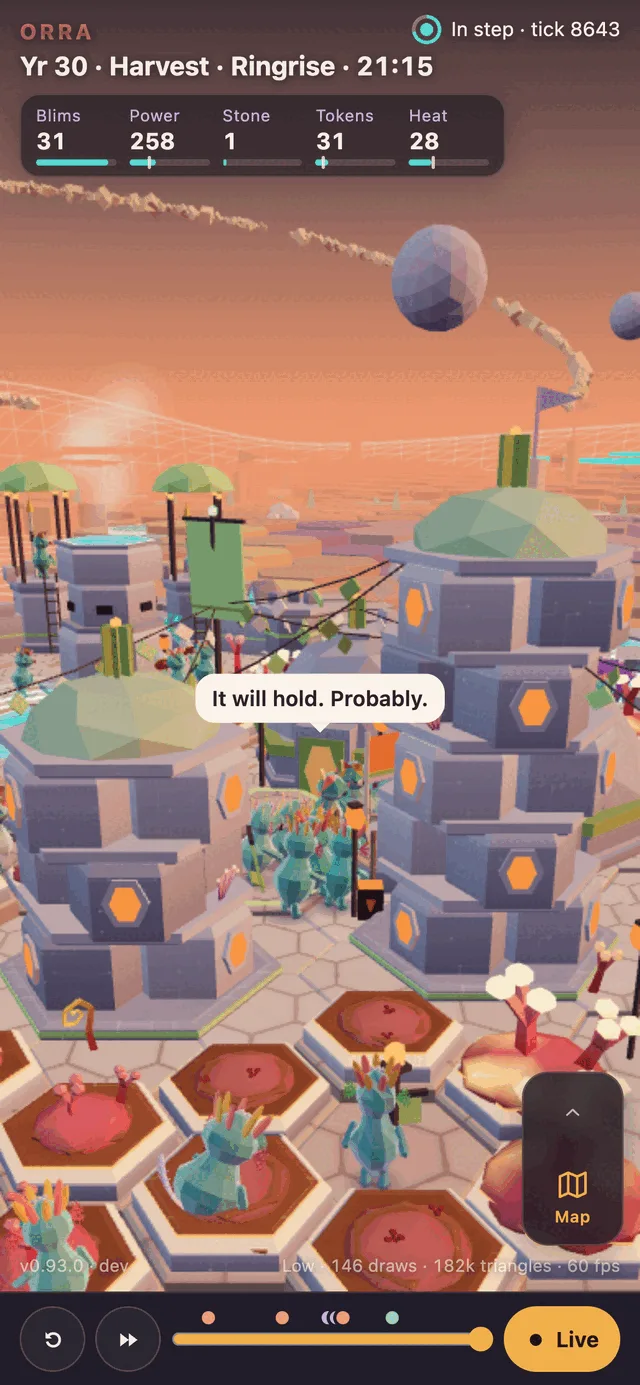
A village on a phone. Bottom left: 146 draws, four inside the budget.
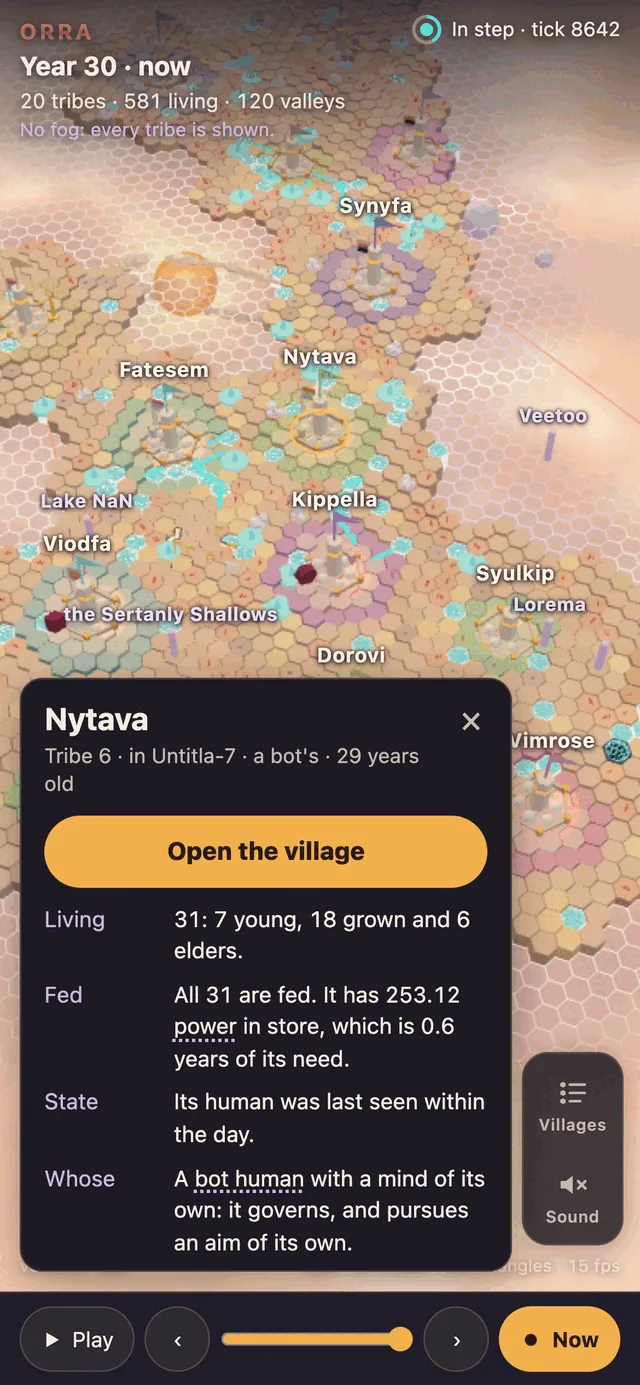
The map, with a settlement’s card open: 581 living in twenty tribes.
The builder cannot hear
My first game beeped because SOUND was all QBasic gave me. Orra’s sound is
synthesised too, every bit of it, in Web Audio with no samples, and it has the opposite problem.
The tooling that helps build Orra can measure a sound’s level, its range and whether it
plays the same twice. It cannot hear whether it is any good. So every sound was chosen by ear,
mine, through sixteen “try this, then choose” questions. The Blims had spoken voices
for five days in October. They do not now.
The music took the longest. A village’s song is written as it plays, in A A B A form, its motifs and chords drawn from the village’s seed, its key from the season and its scale from the tribe’s mood. Each kind of building plays its own part, as loud as the camera is near it: the memory stack the bass line, a farm an arpeggio, a pool bells. I asked for early-1980s synthesisers, “computery, retro, fun”, heard three palettes, and chose the one called Sequencer. Then it got repetitive, so now it varies: a new chapter every quarter of an hour, parts that rest, a breather now and then.
Eighteen buildings, thirteen kinds, each with a part of its own. Drag on the map to move the camera.
Headphones show the bass; a phone’s speaker will not.
Mood
Occasion
The trailer is filmed from the game itself, in headless Chrome on a frozen clock at a thirtieth of a second a frame, and its music was placed by loudness, measured a second at a time.
An average can be perfectly true and tell you nothing
That line is from the first week’s update, and it is the thing Orra has taught me most. The default law for a tribe with none kept its average heat under fifty. Young Blims run cool, so a tribe with a few young ones had a comfortable average while every working adult overheated. For two years the six settlers ran hot. Then they all collapsed in a single step of the world and lost a harvest.
The simulation keeps finding things nobody designed. Left alone, a tribe runs out of family: in the sandbox, 196 of 460 tribes died out of closed lines, because a tribe that only merges among its own eventually has nobody left who is not too close a relative. That became a reason for tribes to meet. And on day forty, two in five grown Blims on the test world had nothing left to do. That is how Orra got its long game (monuments, weekly boards, releases with a winner) in four days.
Honestly: in beta, and open by invitation
The test world has run every night since 11 October, with twenty tribes played by rule-based bots written for the job, and Stewart has patched it every night since 17 October. The first real world opens on Thursday 26 November to twenty invited players beside twenty bots, a piece at a time: trade on day 8, war and spies on day 15, the first race on day 17, the descent on day 36. It passes if seven in ten come back every day from week three to week eight, and twelve of the twenty are still playing in week eight. There is no list to join.
One bug is open as I write: a find worn over the wrong part writes a world the simulation cannot read back, the same kind of fault the Lint was. The stick figure on the green line never knew it was code. The Blims do, and they will want a word about it in the morning.
Got a world that has to keep running after everyone closes the page? Here’s how we could work together.